

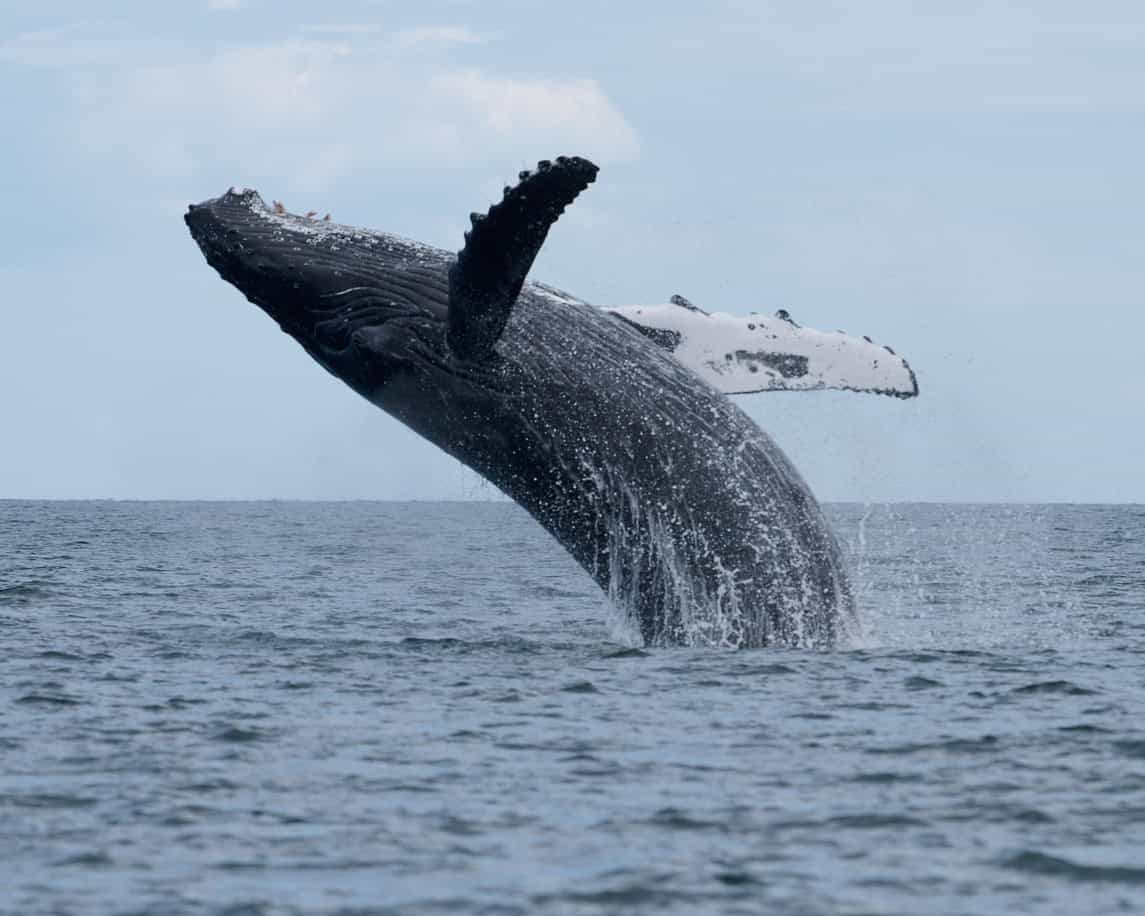
Over the past few summers, something wonderful has been happening; marine mammals are making a comeback in Milford. Boaters and beach goers have spotted harbor seals, dolphins, and humpback whales. It has been a treat for all who have watched them enjoy the waters with us Milfordites.
Over the last century, the waters of Long Island Sound have endured tough times. Pollution from industry and trash changed the character and chemistry of the Sound. Between pollution and overfishing, marine life began to decline. In 1972, the Marine Mammal Protection Act was enacted and is regarded as the most impactful species conservation legislation with an emphasis on ecosystems as well as animals.
“Marine mammals have returned to our waters due to improved water quality, reduced nitrogen pollution, and an increase of marine life. The best opportunity to view them is July through late fall,” explains Tim Chaucer, director of the Milford Marine Institute. “Large pods of over one hundred dolphins have been spotted near Silver Sands and Charles Island. Seals have been spotted in Caswell Cove. Humpback whales have also been observed near Charles Island.”
Harbor seals have been sighted along the coast for a number of years. “Seals are solitary creatures. They do not vocalize often because they don’t really have a need to communicate with another,” says Dylan Salamone, assistant curator for mammals at The Maritime Aquarium in Norwalk. “If they are going to communicate with each other, it is to warn about getting too close or when they are trying to attract each other during mating season. Otherwise, they are silent for a reason; to keep themselves safe from predators by not drawing attention to themselves.” Further, Salamone explains that, “The 1972 the Marine Mammal Protection Act federally protected marine mammals, and it is illegal to get close to them. If you want to get up close with seals, please visit us here at The Maritime Aquarium.”
Paul Buda is a local avid boater and fisherman who has been fortunate enough to see two marine mammals. “I was lucky enough to see dolphins and seals on the same day!” Buda recounts. “Over the boating season we saw hundreds of dolphins. It was truly a sight like I had never experienced.” Common bottlenose dolphins feed on a variety of prey including fish, squid, and shellfish. Dolphins are social animals and travel in pods, using high frequency echolocation to track down prey. Working in concert, they drive fish into tight schools to feast upon. Dolphins live between 40-60 years. Females gestate for twelve months, and once born, calves stay with their mothers for 3-6 years. Dolphins weigh between 300-1,400 pounds, with lengths of 6-13 feet. They are fast swimmers, reaching top speeds over 35 miles per hour.
Historically, humpback whales have been observed breaching in the Sound for hundreds of years, but sightings decreased over the past 50-60 years. The good news, according to the Atlantic Marine Conservation Society (AMSEAS), is that humpback whale sightings have climbed in the past few years. Boaters have been lucky enough to catch a glimpse of these remarkable mammals. Their annual migration to the waters of New England is spent feasting from summer through autumn as they prepare for their journey to the Caribbean to mate and calve. Communicating via whale songs they work in concert diving deep, creating bubble nets which force fish to surface, allowing whales to feast. These toothless giants use large plates called baleen, taking in large volumes of water to sieve the krill and fish they consume. On average, these charming cetaceans are 60 feet long, weigh 40 tons and live for 80-90 years.
If you are driving along the water, walking the boardwalk, enjoying the surf, or cruising in your vessel keep an eye out for all these incredible creatures.
Keep Your Distance!
If you spy a seal, dolphin, or whale in the waters of Milford, remember to stay a safe distance from the mammal. Animals in the wild are notoriously unpredictable and their safety (and yours) is paramount.
Here are some good guidelines for distance:
- Dolphins – 150 feet
- Seals – 150 feet. If they are on shore, make it more. Also keep dogs away.
- Whales – 500 feet or more. If you follow them by boat, be sure to stay back 1,500 feet and proceed parallel to its tail.
Always remember that these are wild animals and can be aggressive. Do not accelerate toward or attempt to move a marine mammal.
If you encounter an injured marine mammal, contact the Animal Rescue Clinic (ARC) Hotline 860-575–5955 extension 107. Take pictures. ARC will dispatch a rescue team.
—Susan Carroll Dwyer